01
I kept rewriting the deck. The problem was somewhere else.
I pushed AI tools at my design team twice, eighteen months apart. Both talks landed fine. Nobody worked any differently on the Monday after either one.
The 30-second version
- The problem
- I was asked to bring AI tools into a design team. I ran two talks, eighteen months apart. Both went down well, and nobody changed how they worked.
- What we did
- Looking back, I only ever did the first step: letting people know the tools exist. I never picked who it was for, what it should fix, or what would count as success.
- Result
- No budget, so I still pay for the account myself. Now I start by timing one step people complain about, change it, and take that number to the conversation.
My part
- Working out what the tools could actually do
- Trying everything, keeping four
- Two sessions — both of them step one
Platforms
- Figma
- Framer
- Uizard
- Galileo AI
- ChatGPT
- Adobe Generative Fill
Team
- A design team of five to ten
Client & timeline
- D-Link — internal
- 2023.07 · 2024.12

What happened
Two talks about AI, and nobody changed how they worked
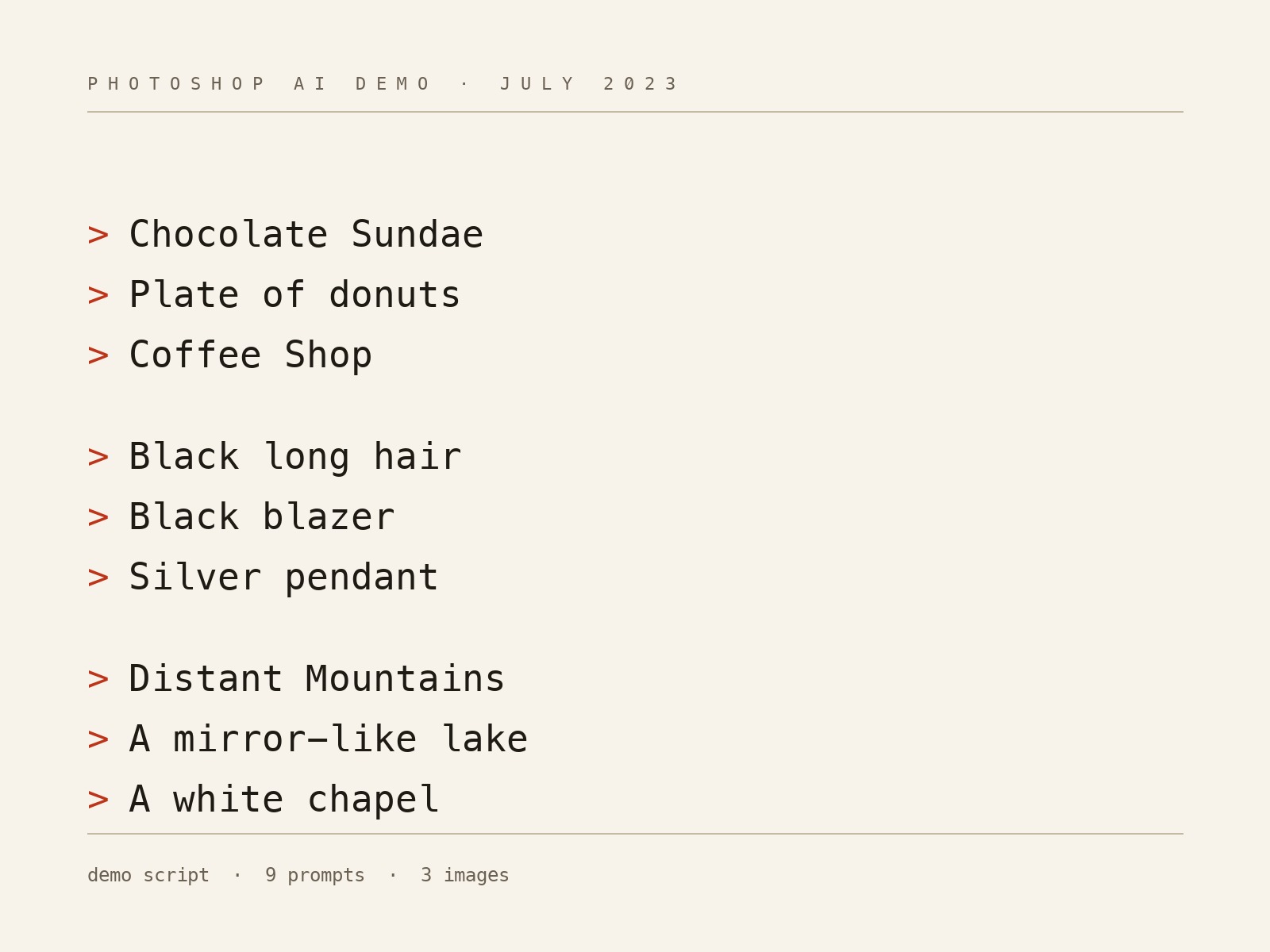
In July 2023 and December 2024 I ran an AI tools session for a design team of five to ten. The first time I demoed Photoshop's Generative Fill with nine before-and-afters. The second time I talked about how I read the whole situation, over 36 slides. Both went down well. Afterwards, nobody worked any differently.
- 2
- talks, 18 months apart
- 36
- slides the second time

What I missed
Getting a tool used takes four steps
A talk only moves people through the first one. I did the first step twice and never thought about the other three.
- 1
Hearing that it exists.
- 2
Opening it once.
- 3
Getting a bad first result and trying again anyway.
- 4
Putting it into how you actually work.
Three blanks
No person, no problem, no number
These should have been settled before I started. Because they weren't, when the free tiers ran out and I asked the company to pay for a seat, I had nothing to argue with. It wasn't approved, and I've paid for that account myself ever since.
- 1
Who it's for. I presented to everyone, but a fast senior designer saves almost nothing while someone new to a task can save a day. I should have picked the two or three people with the biggest gap who wanted to try.
- 2
What it's for. I was handed "adopt AI", which is an answer, not a question. The real problem was right there: buying stock images meant a licensing sign-off and a wait.
- 3
What counts as working. I never said, so nobody could tell whether it worked, including me.
What I got right
I read the technology right
Everyone was asking whether AI would replace designers. I asked something smaller: design has five layers, so which ones has AI reached? At the end of 2024 my answer was the top two: a sentence becomes a screen, colours, layout, layer names, sketches turned into UI. Below that it fell apart. Two years on, I'd draw the line in about the same place.
But that's reading technology, not making a product decision. It says what the tool can do, not whose week gets shorter or how you'd know it helped.
How I drew the line at the end of 2024:
AI can do it
- Surface
- Skeleton
Screens from a sentence, colours, layout, sketches turned into UI
Still needs a person
- Structure
- Scope
- Strategy
How features add up to a product, and balancing what the business and users want
What I'd do now
Start with a number, end with the talk
This is now the first thing I check when anyone, me included, says we should bring in a new tool.
- 1
Pick the step people complain about most that you can actually time.
- 2
Measure how long it takes now.
- 3
Change only that step, and work out the difference.
- 4
Take that number to the budget conversation.
- 5
Hold the talk last. A talk is for people who already want it; it doesn't create them.